
Are Employee Gifts Tax Deductible? What HR and Finance Should Know

Olivia Carmichael
October 8, 2026
You have a holiday gift picked out, a recipient list, and a vendor quote. Then finance asks, “Can we deduct this?” Payroll asks something else: “Do employees owe tax on it?”
Both questions matter, and they can have different answers. Employee gifts are often deductible business expenses when you classify and document them properly. But a company deduction does not make the gift tax-free for the employee.
This guide covers the main U.S. federal points and gives HR and finance a simple way to review a gift program. It is general information, not tax advice. Ask your accountant or payroll adviser to confirm the treatment for your company and recipients.
Treat it as two decisions
The company decision: Can we deduct it?
First, decide what type of expense the gift is and which deduction rules apply. The IRS says employee pay can include cash, property, awards, bonuses, and fringe benefits. Its small-business guidance generally allows deductions for employee pay that is ordinary and necessary, reasonable, and for services performed, subject to the applicable requirements. IRS Publication 334
The payroll decision: Is it taxable to the employee?
Next, decide whether the employee receives taxable compensation or whether a specific exclusion applies. Benefits received for services generally count as compensation unless the recipient pays fair market value or the law excludes them. IRS taxable and nontaxable income guidance
These answers can differ. Your company might deduct a gift card as employee compensation while payroll includes its value in the employee’s taxable wages. The deduction belongs to the business. The wage treatment belongs to the employee.
Document both answers. A purchase order labeled “employee appreciation” settles neither.
Small physical gifts may be excluded from wages
Some occasional gifts may qualify as de minimis fringe benefits. The IRS looks at value, frequency, and whether accounting for the benefit would be unreasonable or impractical. The benefit can’t be disguised compensation. Holiday gifts appear among the examples in its guidance. IRS de minimis fringe benefits
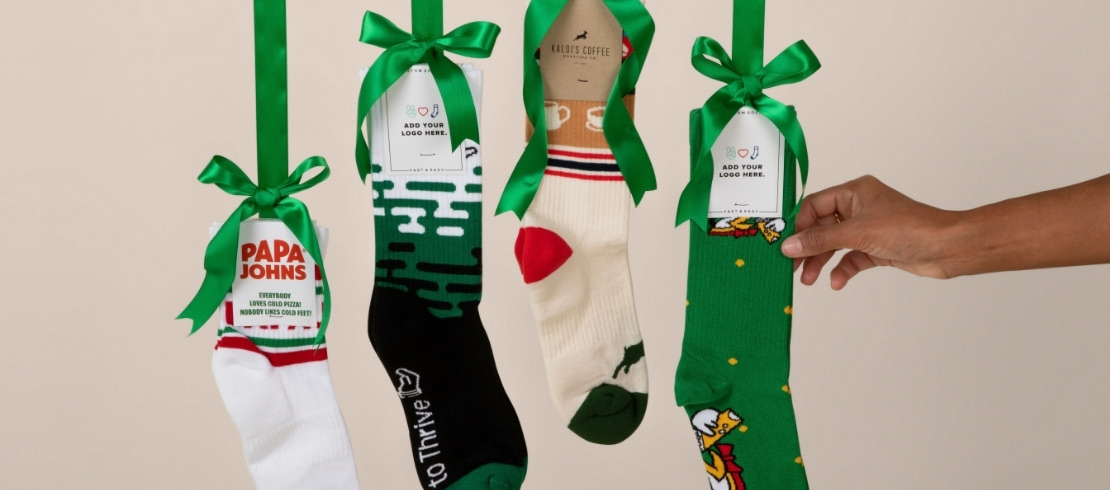
So a small, one-time physical holiday gift deserves a different review than a recurring reward. But there is no blanket exemption for apparel, custom socks, or anything with a company logo.
Give your reviewer the full picture: the item, its value, the occasion, and how often employees receive similar benefits. A one-time thank-you and a monthly merchandise reward need separate assessments.
Don’t treat your internal spending limit as an IRS safe harbor. The IRS decides based on the facts and circumstances, so staying under your budget doesn’t settle the question. And if a benefit is too large to qualify as de minimis, the entire value is taxable, not just the amount above an assumed threshold. IRS de minimis guidance
Gift cards need a payroll plan
Cash and cash-equivalent gift cards don’t qualify for the de minimis exclusion just because their value is small. A $20 general-purpose gift card is not tax-free simply because it costs less than a physical gift. IRS Publication 15-B
You can still choose gift cards. Just plan the payroll handling before you hand them out:
- Send payroll the details. Agree on who sends the recipient list, values, and distribution dates.
- Prepare employees. If they will see extra withholding, write a short note so the gift doesn’t lead to pay-stub questions.
- Decide on a gross-up. If the company wants to cover the employee’s tax, have payroll calculate the cost and finance approve it.
A clear approval request might read: “We propose general-purpose gift cards for 80 employees. Payroll will confirm taxable wage treatment, processing timing, and whether the approved budget includes a gross-up.”
The $25 business-gift rule answers a different question
The IRS generally limits deductions for business gifts to $25 per person per tax year. Incidental costs, such as packing or shipping, don’t count toward that limit when they don’t add substantial value. IRS business-gift deduction FAQ
This rule usually comes up for gifts to clients and other business contacts. It is not a universal employee-gift budget or a $25 payroll exclusion. Employee compensation and fringe benefits need their own analysis.
If your program covers several groups, keep employees, clients, and other contacts separate, even if everyone gets the same product. Have your accountant confirm the expense treatment for each group. Don’t apply one deduction assumption to the whole invoice.
Achievement awards have their own rules
Certain tangible-property awards for length of service or safety achievement have specific exclusion and deduction rules. Calling a gift an “award” isn’t enough: a meaningful presentation, limits, and other conditions apply. Don’t assume ordinary holiday gifts or general performance rewards qualify. IRS Publication 15-B, achievement awards
If you celebrate service anniversaries, bring in your tax reviewer while you design the program. Keep it separate from your year-end appreciation order so the purpose and approval record stay clear.
Build a one-page approval packet
Give HR, finance, and payroll the same short brief:
- Recipients: Employee count and locations, with nonemployees listed separately. Flag owners or others who need individual review.
- Purpose: Holiday appreciation, onboarding, a milestone, or another specific occasion.
- Gift: The exact item or card type, quantity, and any substitutions.
- Value and cost: The itemized vendor quote and any value details payroll requests. Show packaging and delivery costs.
- Frequency: Similar gifts or rewards already given, plus any planned recurring ones.
- Treatment: Finance’s expense classification and payroll’s conclusion, including the basis for any exclusion.
- Owners: Who approves, distributes, keeps the recipient record, and sends information to payroll.
Get the tax decision before you finalize the order. That leaves time to change the gift, adjust the budget, or explain payroll handling while the plan is easy to revise.
For taxable noncash benefits, payroll generally uses fair market value under the applicable valuation rules. Your bulk purchase price doesn’t automatically set that value. Keep the invoice and ask payroll what other evidence it needs. IRS Publication 15-B, valuation rules
Keep a clean final record
Save the approved brief, invoice, distribution date, recipient record, and reviewer’s conclusion together. Check what you actually distributed against what was approved. If you add a gift card to a physical gift set, send the change back for review. Don’t rely on the original decision.
Assign one person to close the loop with payroll. A vendor’s delivery confirmation tells you a package arrived. It doesn’t tell payroll what treatment was approved.
Once those decisions are clear, you can focus on making the gift useful and personal. For product, packaging, and delivery planning, see our holiday corporate gifts guide.
Considering custom socks for your team? Request free sock designs and share your employee count, occasion, and budget. Review the tax treatment with your adviser while you explore designs.