
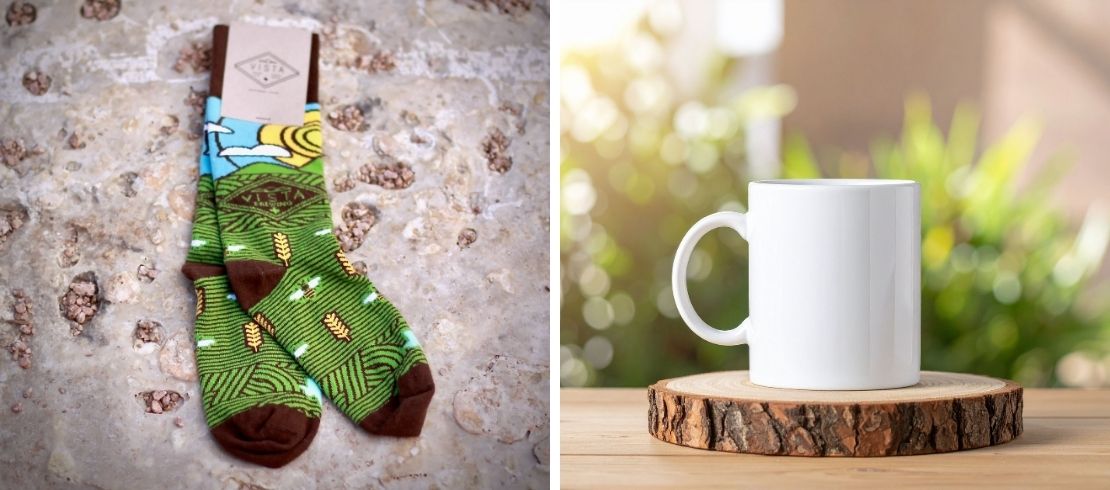
Why Sock Gifting Beats $5 Mugs (Data Inside)

Olivia Carmichael
September 22, 2026
A $5 branded mug makes an easy case on a purchasing spreadsheet. The item is familiar, the unit price is low, and nobody needs an explanation of how to use it. For a buyer trying to stretch a limited promotional budget, that simplicity has real appeal.
The problem is that a corporate gift does not prove its value when the purchase order gets approved. It proves its value when the recipient decides whether to keep it, use it, and associate it with the company that sent it. A product that clears procurement but never earns a place in someone's life is not much of a bargain.
That is where custom socks can beat another inexpensive mug. They cost more upfront, but they give a brand more ways to combine everyday usefulness with quality, personality, and a sense of occasion. The case is not that mugs never work. Good drinkware performs very well. The case is that a thoughtful, wearable gift can create more value than a generic item chosen mainly because it was cheap.
What the latest promotional product data says
Recent research offers a useful framework for making that choice. PPAI’s 2026 consumer study surveyed more than 3,400 people in the United States, and nearly 90% said they keep branded merchandise regularly or occasionally. The reasons people keep or discard those products are especially revealing:
- 55% kept an item because it was useful in daily life.
- 21% kept an item because it was high quality.
- 38% discarded an item because it was not useful.
- 27% discarded an item because of poor quality.
- 68% said usefulness makes branded merchandise feel valuable.
- 65% said high quality makes it feel valuable.
- Nearly 90% said high-quality merchandise improves how they view a brand.
The same study found that 73% of consumers prioritize functional value over emotional value when forced to choose. Function is only the starting point, however. Thirty-eight percent said an emotional connection strongly increases their connection to a brand, while another 46% said it somewhat increases that connection.
Together, those findings suggest a clear buying standard: choose something useful first, then make it good enough and relevant enough to feel like a genuine gift. A product needs practical value to enter the recipient's routine, but quality and meaning are what distinguish it from the other branded objects competing for attention.
Mugs work. Cheap, generic mugs are the problem.
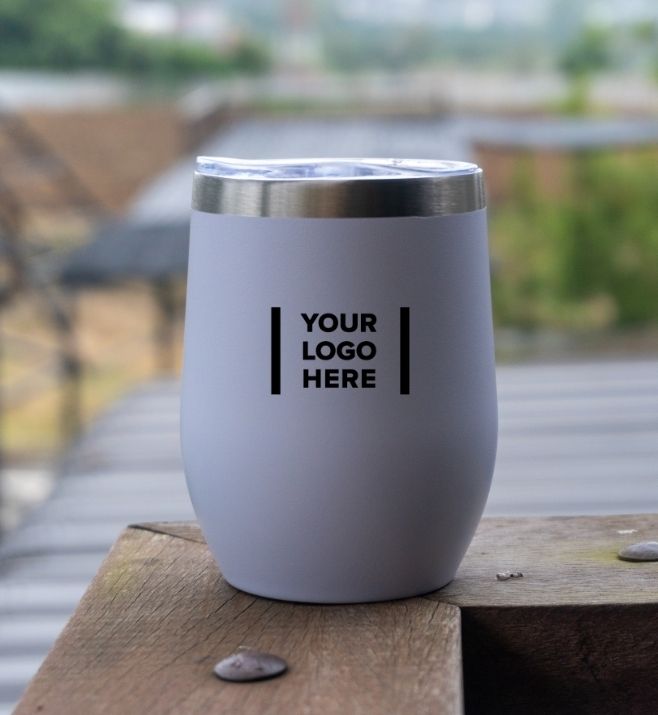
Any honest comparison has to acknowledge that people do use promotional drinkware. The Advertising Specialty Institute’s 2026 drinkware study found that 87% of end users would keep branded drinkware because it is useful. More than three-quarters said they would use a promotional drinkware item at least once a week and keep it for at least a year. ASI estimated about 1,300 lifetime brand impressions for the category.
Those results cover a broad category that includes ceramic mugs, glassware, reusable bottles, insulated tumblers, and premium retail brands. They do not show that a $5 ceramic mug performs like every other type of drinkware, especially a premium bottle or tumbler.
That distinction changes the conversation. A well-made mug can be an excellent gift when it suits the audience and improves on what recipients already own. A low-cost mug with a large logo faces a tougher challenge. It has to compete for cabinet space, and the lower price can show up in its weight, finish, or durability.
The more useful comparison, then, is not simply mugs versus socks. It is a familiar commodity versus a purposefully designed gift.
The honest comparison: $5 mugs versus custom socks
There is no credible, neutral head-to-head study showing that every pair of custom socks outperforms every $5 mug. The $5 figure in this article is a hypothetical purchasing baseline, not a sourced market average. Campaign goals, product quality, design, audience, distribution, and timing all shape the result, so a universal performance claim would be misleading.
What buyers can compare are the practical strengths and tradeoffs of each format:
| Buying factor | $5 promotional mug | Custom socks |
|---|---|---|
| Upfront unit cost | Lower | Higher |
| Daily usefulness | Strong for people who need another mug | Strong for people who wear socks |
| Design opportunity | Usually an imprint on a fixed product | The design can cover the entire sock |
| Brand expression | Familiar and direct | Wearable, subtle, and flexible |
| Sizing work | None | One-size-fits-most works for many adults, with other sizes available |
| Gift presentation | Depends on the mug and packaging | Header cards, sleeves, and gift boxes are available |
| Shipping and handling | Rigid and breakable | Soft and compact |
| Best use | Broad giveaway with a strict unit budget | Employee, client, event, and community gifting where memorability matters |
Socks clearly do not win on the initial unit price. They win when the additional spend produces a more distinctive experience, a stronger connection to the brand, or a gift that better fits the occasion.
Why socks can create more value per recipient
1. Socks meet the usefulness test
PPAI's research establishes usefulness as the baseline for effective branded merchandise, and socks start from a practical place. Recipients can put them into an existing routine rather than inventing a reason to use them.
Of course, utility alone does not guarantee that every pair will make it into regular rotation. Material, construction, fit, and design all matter. Still, the product has a clear purpose from the moment it arrives. In its 2026 report on promotional socks, PPAI described the category as practical and versatile across seasons and demographics. It also noted that socks allow someone to represent a brand more subtly than a bold logo shirt.
2. The product can carry an actual creative concept
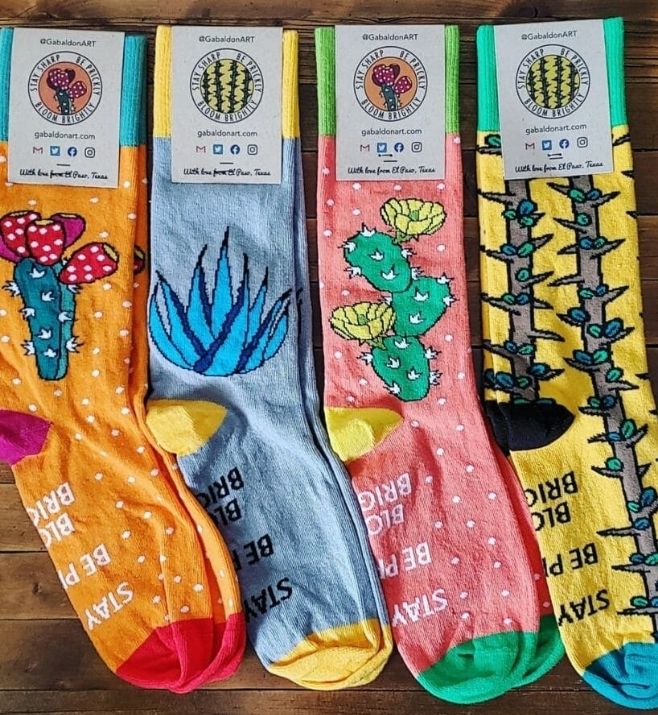
A standard promotional mug often adds a logo to the side of an existing object. A custom knit sock can integrate brand colors, mascots, icons, products, places, or an inside joke into the product itself. Instead of treating decoration as an afterthought, the sock turns the creative idea into the gift.
That flexibility matters because design has a measurable influence on retention. PPAI’s research on promotional product design found that nearly 90% of respondents consider design when deciding whether to keep a promotional product. It also found that 44% prefer subtle branding over large, bold logos.
Socks can satisfy both preferences without erasing the brand. A designer might use a small repeated icon, translate a product into a pattern, build a tonal color story, or hide a detail just above the ankle. The finished piece can feel like apparel someone would select for themselves instead of advertising they agreed to carry.
3. One flexible size reduces the apparel headache
Wearable gifts usually create an operational tradeoff. Shirts and jackets can have high perceived value, but they also require buyers to collect sizes, build an order by size, and sometimes manage exchanges afterward.
Sock Club’s One-Size-Fits-Most crew fits roughly 90% of adults. The company also offers a range from infant through large adult when a program needs broader coverage. That makes socks an appealing middle ground: buyers can give apparel without managing the same size matrix required by many shirts or jackets.
4. Quality becomes part of the brand message
PPAI found that nearly 90% of consumers say high-quality merchandise improves their view of a brand. In other words, the item's physical feel becomes part of the brand message, whether the buyer intends it or not.
Sock Club's flagship crew sock uses a blend of 75% U.S.-grown cotton, 21% nylon, and 4% spandex. The construction includes cushioning in the heel and toe, compression knitting in the footbed, and a ribbed leg. Sock Club knits the socks in North Carolina using cotton sourced and spun in the Southeastern United States.
These are not just manufacturing specifications. They give the recipient something tangible to notice, and they give the buyer a quality story rooted in the product itself. Custom packaging or a personal note can introduce that story before the recipient even puts the socks on.
5. Socks leave room for a personal moment
The strongest corporate gifts often carry a message that makes particular sense to the group receiving them. A pair of socks in a new-hire onboarding kit can feature the product a new hire will help build. An anniversary design can reference a company milestone, while conference swag can turn the host city into a sock pattern. A customer gift might celebrate a launch both teams worked hard to complete.
Those details support the emotional side of PPAI's findings. Function earns the product a place in someone's routine, while a relevant design gives the recipient a reason to remember who sent it. That combination is difficult to create with a generic item pulled from a catalog and stamped with a logo.
What does the price difference buy?
The price comparison needs the same honesty as the performance comparison. At the time of publication, Sock Club lists its flagship custom crew socks at $9.73 per pair for orders of 480 to 719 pairs. An order of 500 pairs would therefore have a product subtotal of $4,865 before shipping or optional packaging.
Using the hypothetical $5 mug from this article's title, 500 mugs would cost $2,500 before any other charges. The socks would add $2,365 to the product budget, which works out to $4.73 more per recipient.
That premium does not guarantee a return. What it buys is the opportunity to give a fully designed, wearable product rather than another low-cost commodity. The useful question is not simply, "Can we save $4.73?" It is, "Will spending $4.73 more create a meaningfully better experience for this audience?"
If the design, recipient, and occasion do not support that experience, the mug may be the smarter choice. If they do, the incremental cost may be exactly what helps the item cross the line from promotional merchandise into a gift.
When a $5 mug is still the right choice
Choose the mug when:
- The budget has a firm per-person ceiling.
- The audience has asked for mugs or uses them in a shared workplace.
- The campaign needs a broad, familiar giveaway.
- The design works well on drinkware.
- You can verify the mug's quality before ordering.
A mug also makes sense when drinkware connects directly to the campaign. A coffee roaster, café, hospitality brand, or morning event has a natural reason to give one. In those cases, relevance matters more than novelty, and a good mug can tell the right story.
When custom socks are the better gift
Choose socks when:
- You want a gift to feel designed for a specific team or audience.
- You want wearable merchandise without collecting several apparel sizes.
- Your brand has colors, characters, icons, or a story worth turning into a pattern.
- You need a compact item for event kits or individual shipments.
- You want packaging to carry a note, campaign message, QR code, or event detail.
- You care more about the recipient experience than reaching the lowest possible unit cost.
Sock Club currently offers a 30-pair minimum for its flagship crew socks, so the format can work for a department or focused customer group as well as a larger company program. Most orders ship in three business days after design approval. The in-house team provides design work without a design fee, and buyers can add custom packaging when the presentation needs to feel more finished.
How to make custom socks worth the upgrade
Paying more for a product will not rescue a weak concept. Buyers still need to make deliberate choices about the design, context, and measurement plan if they want the upgrade to pay off.
Design for the wearer
Start by asking whether someone would choose to wear the design even if they did not receive it at work. Treat the logo as one ingredient rather than the entire idea. A smart pattern, a subtle detail, or a shared reference can create a stronger connection while keeping the brand recognizable.
Match the sock to the moment
Let the occasion guide the style. An athletic sock makes sense for a wellness program, run club, or active event, while a polished crew sock can suit onboarding, anniversaries, or client gifts. The design feels more intentional when the product choice reflects how and where recipients might use it.
Add context
Give recipients a reason for the gift. A short note can explain how the pattern connects to a milestone, company value, or shared achievement. That small addition is supported by the research: PPAI's 2025 study found that 48% of consumers said a short personal message or note would make a promotional product more meaningful.
Sample the physical product
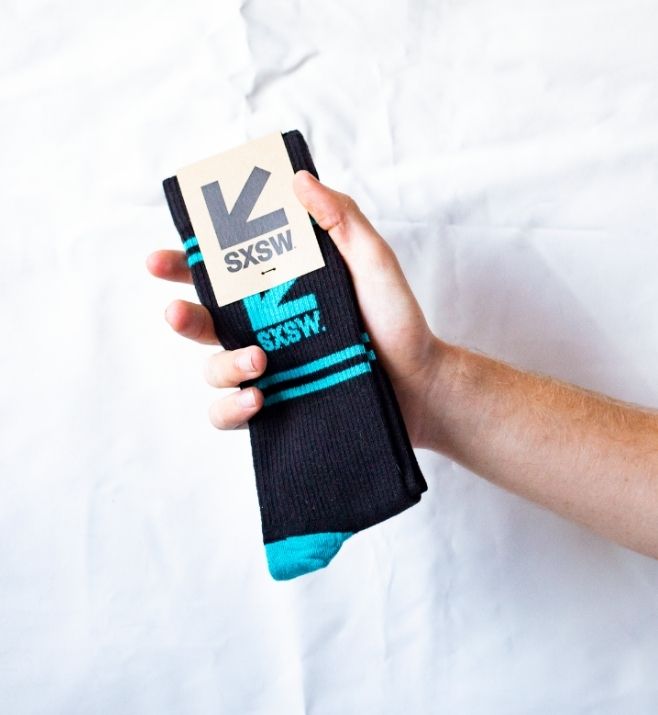
Review the physical sample with the same care you would give any customer-facing brand asset. Check the material, fit, knit clarity, colors, and packaging before committing to the full run. PPAI's findings show that product quality influences brand perception, so sample review is also brand review.
Measure the campaign you actually ran
Choose measurements that match the program. A QR code on the packaging can track visits when clicks matter, while a short employee survey can capture preferences after an internal gift. Event engagement, social posts, repeat orders, and qualitative feedback can also help buyers evaluate the result. Category-wide impression estimates provide context, but they should not replace data from the campaign itself.
The bottom line
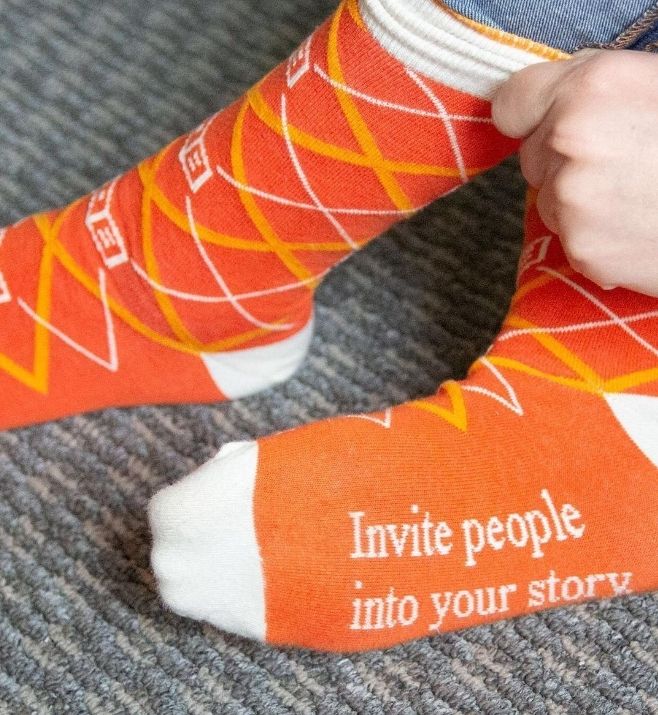
A $5 mug can be useful, especially when it fits the audience and feels good in the hand. It can also disappear into a cabinet full of similar mugs. The category alone does not determine the result; the recipient experience does.
Custom socks cost more because they answer a different brief. They combine everyday function with flexible sizing, full-product design, tactile quality, and the opportunity to tell a more personal story. For employee appreciation, onboarding, corporate holiday gifting, and memorable event kits, those qualities can justify the extra $4.73 in the 500-unit example.
The latest research points buyers toward the same standard again and again: give people something useful, make it well, and design it with them in mind. When a pair of socks meets that standard, it stops feeling like another promotional product and starts feeling like a gift.
Get free custom sock designs for your next gifting program.